
How We Reduced TACoS by 30% While Increasing Total Amazon Sales
Total Advertising Cost of Sale — TACoS — measures advertising spend as a percentage of total channel revenue. Not ad-attributed sales. Total revenue. That distinction is where most brands get it wrong.
When TACoS falls while total revenue rises, organic sales velocity is increasing. Paid ads are carrying less of the load. The channel is compounding. When TACoS holds flat or climbs despite heavy ad spend, the brand is buying sales it should be earning — and contribution margin is quietly eroding.
Reducing TACoS by 30% while growing total Amazon revenue is not a campaign optimization outcome. It is a channel management outcome. Those are not the same thing.
A 30% TACoS reduction comes from four levers working at the same time. First, MAP enforcement and unauthorized seller removal — unauthorized sellers undercut pricing, suppress buy box wins, and train customers to expect a lower price, which forces more ad spend to close each sale. Second, listing and review health — nearly 80% of U.S. adults read online reviews before purchasing, which means review volume directly determines how much paid traffic a listing needs to convert. Third, advertising architecture built around TACoS targets — campaigns structured not to minimize ACoS in isolation, but to shrink advertising's share of total channel revenue over time. Fourth, P&L discipline with contribution margin tracking — Amazon sellers can pay close to 50% of their total revenues back to the marketplace in fees and advertising, so a TACoS number that looks healthy on a report can still fail on the P&L.
Run all four together — not in sequence, not in isolation — and organic velocity starts compounding on its own. That is what a real TACoS reduction looks like.
Last Updated: June 15, 2026
- • Why TACoS Is the Only Metric That Tells the Full Story
- • The Four Operational Levers That Moved the Number
- • What This Looks Like in Practice: Timeline and Milestones
- • Who This Works For — and Who It Does Not
-
• Frequently Asked Questions
- • How long does it realistically take to see a 30% reduction in TACoS without hurting active sales velocity?
- • Will reducing our Amazon ad spend to optimize TACoS cause our organic search rankings to drop?
- • Why do traditional ACoS-focused media buyers fail when trying to manage holistic channel profitability?
- • What operational bottlenecks should we expect when integrating a partner who takes Full Operational Responsibility for our Amazon P&L?
- • How do we handle unauthorized resellers who are actively undermining our pricing and inflating our TACoS?
- • Is TACoS optimization only relevant for brands already spending heavily on Amazon advertising?
- • The Tide Gauge Reading: What a 30% TACoS Reduction Actually Means
Why TACoS Is the Only Metric That Tells the Full Story
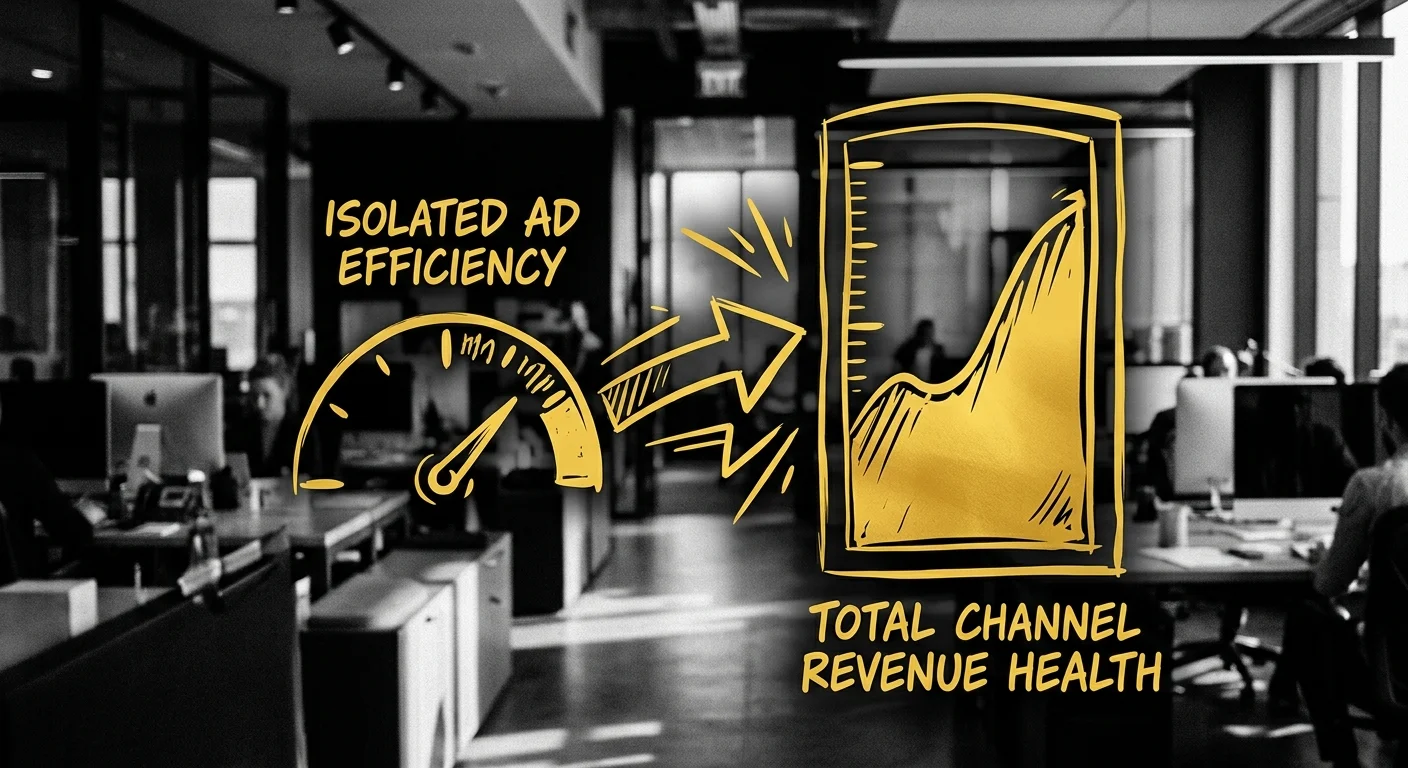
Most brands are watching the wrong number.
ACoS — Advertising Cost of Sale — tells you how efficiently your ad budget is working on ad-attributed revenue. That's it. It tells you nothing about what's happening to the other 60, 70, or 80 percent of your channel that isn't being driven by paid clicks.
And that's the part where the real story lives.
TACoS tells the full story. It measures advertising spend as a percentage of total channel revenue — not just the sales your ads touched. That single difference in denominator changes everything.
A brand can have a pristine ACoS while its organic share is collapsing, its contribution margin is eroding, and its channel is becoming more dependent on paid spend every single month.
The ACoS looks fine. The P&L doesn't.
Here's the simplest way to think about it: ACoS tells you how hard the engine is running. TACoS tells you whether the ship is moving.
An agency watching only ACoS is staring at the engine room. An agency watching TACoS is watching the horizon.
That's the only vantage point from which TACoS optimization for Amazon brands actually makes sense as a discipline.
Why ACoS-Only Optimization Fails
So what happens when a brand asks its agency to reduce ACoS?
The agency does exactly what it was asked. It tightens bids. Cuts underperforming campaigns. Narrows targeting. ACoS drops. Everyone on the call nods.
Meanwhile, organic velocity has stalled. Unauthorized sellers are suppressing the buy box. Listing conversion rates are quietly declining. None of that shows up in ACoS. And nobody's looking for it.
And that's where it gets expensive.
Brands that optimize ad spend in isolation from total channel economics risk a 5–10% decline in gross operating margins from uncoordinated spend alone. A low ACoS on a shrinking revenue base isn't a win. It's a warning sign — and a quiet one.
The channel is contracting. The agency is either not tracking it or not saying so.
Advertising is one input into a channel P&L. Not the primary lever. Not the rescue plan.
That distinction separates task-based ACoS management from operator-led channel management. One produces a metric that reports well. The other produces a channel that compounds.
At Marketplace Valet, a healthy ACoS was never the goal. A falling TACoS alongside rising total revenue — that's the only scorecard that matters.
| Metric | What It Measures | What It Misses | Risk of Over-Relying On It |
|---|---|---|---|
| ACoS (Advertising Cost of Sale) | How efficiently your ad budget converts on ad-attributed revenue | Organic sales velocity, buy box health, listing conversion rates, and total channel revenue — everything outside the paid click | A brand can achieve a low ACoS while its organic share collapses and its channel becomes entirely dependent on paid spend to sustain revenue |
| TACoS (Total Advertising Cost of Sale) | Advertising spend as a percentage of total channel revenue — paid and organic combined | The individual campaign mechanics driving that number — which ad types, which ASINs, which targeting layers are working | Watching TACoS without understanding the levers behind it makes it hard to act on what the number is telling you |
| Organic Sales Share | What percentage of total revenue is arriving without a paid click | Whether that organic share is stable, growing, or quietly eroding underneath a healthy-looking ACoS | Ignoring organic share allows listing decay, review stagnation, and unauthorized seller activity to compound invisibly |
| Contribution Margin | Whether the channel is actually profitable after Amazon fees, advertising costs, and cost of goods | Velocity and revenue growth that paper over margin destruction — a channel can grow in sales while shrinking in profit | Optimizing for TACoS or ACoS without tracking contribution margin produces a channel that reports well and fails on the P&L |
| Buy Box Win Rate | How often the brand's listing controls the primary purchase path versus third-party or unauthorized sellers | Pricing integrity and brand authority — a suppressed buy box forces more advertising spend to compensate for lost organic conversion | Low win rates quietly inflate TACoS by increasing the ad load required to generate the same revenue a clean buy box would produce organically |
The Four Operational Levers That Moved the Number
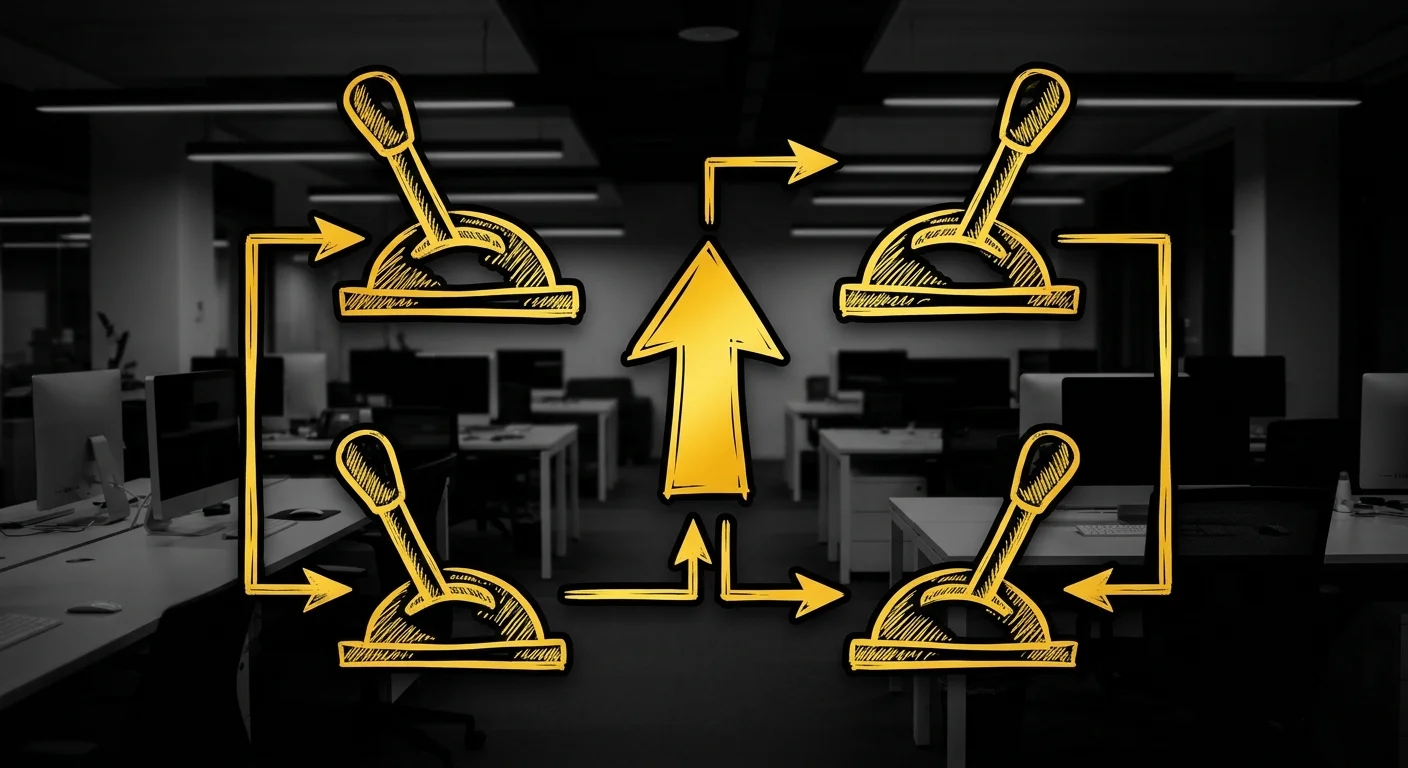
Here's why most TACoS reduction efforts go nowhere.
Brands hand the work to an agency. The agency optimizes the only thing it controls — bids and budgets. ACoS tightens. TACoS doesn't move.
That's not channel management. That's campaign management with a better slide deck.
The four levers that actually move TACoS don't live inside the ad console.
Two of them — MAP Enforcement and Unauthorized Seller Removal and Organic Velocity Through Listing and Review Health — are defensive. They reduce the advertising work required to convert by fixing what's suppressing organic velocity in the first place.
The other two — Advertising Architecture Built Around TACoS Targets and P&L Discipline and Contribution Margin Tracking — are the operational disciplines that ensure what you build compounds instead of erodes.
None of these levers works alone.
Running better ads while unauthorized sellers undercut your pricing is a treadmill. Fixing your listing health while ignoring contribution margin is theater. Pull any single lever and TACoS can still sit flat.
The only path to a durable 30% TACoS reduction — the kind where total revenue climbs alongside it — is running all four at the same time. That's what Full Operational Responsibility actually means.
Lever 1: MAP Enforcement and Unauthorized Seller Removal
Unauthorized sellers are a TACoS problem. Not just a brand problem.
When a third party lists your ASIN at a lower price, they suppress your buy box win rate. When the buy box drops, conversion drops. When conversion drops, paid traffic converts less efficiently — and you spend more on ads to close the same number of sales.
The TACoS climbs. Not because advertising got less efficient. Because the channel got less defensible.
And removing the seller doesn't undo the damage.
Unauthorized sellers train your customer to expect the lower price. That expectation outlasts the listing. Every month those sellers operate on your ASIN is a month of compounding margin damage — and rising ad spend to compensate for the trust they already burned.
MAP enforcement and buy box reclamation aren't growth tactics. They're the floor the rest of the strategy stands on.
Controlled pricing and brand distinctiveness protect gross margins passively. No additional ad spend required. When the channel is clean, organic conversion improves. When organic conversion improves, advertising's share of total revenue falls.
That's the mechanism. That's why this lever moves first.
Lever 2: Organic Velocity Through Listing and Review Health
Organic sales velocity comes from two inputs: listing quality and review credibility.
Neither lives inside the ad console. Both determine how much paid traffic it takes to close a sale — which means both directly determine TACoS.
Nearly 80% of U.S. adults read online reviews before making a purchase.
That's not a trend to file away. It's the core conversion mechanism on Amazon. A listing with thin review volume or declining review quality doesn't just convert at a lower rate in general — it converts at a lower rate on every paid click you're buying.
You're paying full price for traffic the listing can't close.
The fix isn't more ad spend. It's treating listing health and review velocity as operational priorities — not content tasks handed off to a copywriter.
When images convert, copy is accurate, and review count builds trust, paid clicks close at a higher rate. The same ad budget does more work. TACoS falls — not because you spent less, but because the channel got better at earning the sale without you.
That compounding doesn't stop at a screen. Over 50% of mobile internet users read product reviews while standing inside a physical retail store. Organic trust signals follow the customer everywhere.
Lever 3: Advertising Architecture Built Around TACoS Targets
Most Amazon advertising is structured around ACoS targets.
The agency picks a number — 20%, 25%, whatever the brand approves — and optimizes bids until it hits it. That's not a strategy. That's a reporting exercise.
It tells you nothing about whether the channel is growing or just cycling ad dollars through itself.
Advertising architecture built around TACoS targets starts from a different question entirely.
Not: what's our ACoS? But: what percentage of total channel revenue should advertising represent at this stage of the brand's organic development — and are we moving toward that number or away from it?
That single reframe changes which campaigns get budget, which keywords get suppressed, and what winning actually looks like week over week.
TACoS architecture also catches a problem ACoS-only frameworks can't see.
As rising baseline operational and advertising costs increase on the platform, an ACoS-only framework absorbs the damage invisibly. The campaign looks fine. The P&L takes the hit. A TACoS framework catches it immediately — because the denominator is total revenue, not just ad-attributed sales.
The tide gauge doesn't lie.
Lever 4: P&L Discipline and Contribution Margin Tracking
Amazon sellers can pay close to 50% of their total revenues back to the marketplace in fulfillment, referral, and advertising fees.
That number doesn't shrink because you ran better ad campaigns. It shrinks when you manage margin compression at the channel level — which means tracking contribution margin as a primary output, not an afterthought.
P&L Discipline and Contribution Margin Tracking is what keeps the other three levers honest.
You can clean up unauthorized sellers, build organic velocity, and run TACoS-aligned campaigns — and still erode margin if you're not tracking what the channel actually costs to operate at the unit level.
Amazon's structural pricing pressures prevent sellers from offering lower prices on competing channels. Margin defense isn't a finance team problem. It's the whole game.
The goal isn't a lower TACoS number on a report.
The goal is a channel where contribution margin is healthy, organic velocity is compounding, and advertising is doing proportionally less of the work every month.
That's when the tide gauge shows what it's supposed to show — the water rising on its own.
| Operational Lever | Primary Mechanism | Impact on TACoS | Impact on Organic Revenue |
|---|---|---|---|
| MAP Enforcement and Unauthorized Seller Removal | Reclaims buy box win rate by eliminating third-party price suppression; restores pricing integrity at the listing level | Reduces advertising spend required to convert — organic conversion improves when the buy box is consistently won at MAP price | Compounds organic velocity by training the customer to expect the brand's price, not a discounted third-party alternative |
| Organic Velocity Through Listing and Review Health | Improves paid-traffic conversion rate by strengthening the listing's ability to close a sale without additional ad pressure | Each incremental improvement in conversion rate makes every ad dollar more efficient — advertising does proportionally less work per sale | Builds durable organic ranking signals — review credibility and listing quality drive search placement independent of ad spend |
| Advertising Architecture Built Around TACoS Targets | Structures campaign budget allocation around total channel revenue targets rather than isolated ACoS percentages | Shifts the optimization question from 'what is our ACoS?' to 'is advertising representing a smaller share of total revenue over time?' — catching TACoS drift before the P&L absorbs it | Protects organic sales velocity by preventing over-reliance on paid traffic to close sales the listing should be earning on its own |
| P&L Discipline and Contribution Margin Tracking | Tracks what the channel actually costs to operate at the unit level — fulfillment, referral fees, advertising, and cost of goods — as a primary output, not a reporting footnote | Keeps the other three levers honest — a falling TACoS number means nothing if contribution margin is simultaneously eroding under rising platform fees | Ensures that revenue growth translates into sustainable channel profitability rather than higher gross sales on a shrinking margin base |
What This Looks Like in Practice: Timeline and Milestones

These four levers aren't a slide deck concept. They run in sequence — and the sequence is non-negotiable.
Brands that treat TACoS reduction as a 90-day sprint almost always miss the point.
The timeline isn't arbitrary. It reflects the order in which the levers can actually be pulled. You can't build an advertising architecture around TACoS targets until the channel is clean enough for the signal to mean anything. A declining TACoS alongside growing total revenue demonstrates increasing organic purchase velocity — but that signal only shows up after the structural work is done. Skipping the structural work and going straight to ad optimization is like tuning an engine that's leaking oil.
What follows is how that sequence actually unfolds. Not a guarantee — results vary by brand, category, and investment level — but the operational logic behind an engagement built around Full Operational Responsibility for the Amazon channel.
Days 1–30: Audit, Compliance Reset, and Baseline Establishment
The first 30 days aren't about growth. They're about getting an honest read on what the channel actually is — not what the previous reports claimed it was.
The full account audit runs here: unauthorized seller identification, MAP compliance status, listing health across the active catalog, account standing, and a contribution margin baseline.
The audit also sets the TACoS baseline. TACoS measures ad spend efficiency against total channel revenue — and you can't target a number you haven't accurately measured. The math doesn't work on a dirty dataset.
Brands that skip this and go straight to advertising optimization are building campaigns on an uncleared foundation. The ads may improve. The channel won't.
Days 31–60: Listing Health, Review Velocity, and Ad Architecture Rebuild
Days 31 through 60 are where the organic infrastructure gets built. Listing content is audited and rebuilt where it's weak. Review velocity is addressed operationally — not gamed, fixed.
And this is when the advertising architecture gets restructured. Away from ACoS targets. Toward a TACoS-referenced framework that measures ad spend against total channel revenue, not just the sales your ads directly touched.
Most brands underestimate this phase.
As retail media network advertising costs keep climbing, brands without strong organic conversion infrastructure absorb higher ad costs with nothing to offset them. Marketers are already reallocating legacy brand budgets into bottom-of-funnel retail media networks — which means the competitive pressure on paid placements isn't easing. It's compounding.
Listing health and review credibility are the structural defense against that pressure. Build them now, or pay more for the same sales every quarter after this.
Days 61–90 and Beyond: TACoS Targeting and P&L Integration
By day 61, the channel should be clean enough for TACoS to mean something. Unauthorized sellers are addressed. Listing quality is no longer dragging conversion rates. Advertising is structured around the right denominator.
Now the levers compound. P&L Discipline and Contribution Margin Tracking becomes the frame that keeps everything honest — not a reporting exercise, but the mechanism that tells you whether the channel is actually getting healthier or just producing better-looking numbers.
Brands that optimize advertising budgets in isolation from overall channel economics are taking on real risk. Uncoordinated ad spend can lead to a 5–10% decline in gross operating margins — not because the ads are failing, but because the P&L frame isn't there to catch the erosion before it compounds.
The 90-day mark isn't the finish line. It's when the tide gauge becomes readable.
What online shopping behaviors research consistently shows is that organic trust signals — reviews, listing credibility, pricing consistency — are what drive conversion when ads aren't doing the work. Build those into the channel strategy, and the compounding accelerates.
The water starts rising on its own. That's the signal you've been building toward.
| Phase | Timeframe | Key Actions | TACoS and Revenue Indicators to Watch |
|---|---|---|---|
| Foundation | Days 1–30 | Full account audit — unauthorized seller identification, MAP compliance review, listing health assessment across active catalog, account compliance standing, contribution margin baseline establishment, TACoS baseline measurement | TACoS baseline is recorded but not yet actionable; revenue figures establish the denominator against which all future progress is measured |
| Infrastructure Build | Days 31–60 | Listing content rebuilt where weak, review velocity addressed operationally, advertising architecture restructured away from ACoS targets and toward a TACoS-referenced framework measuring ad spend against total channel revenue | Early TACoS signal begins to stabilize as listing conversion improves and ad spend is redirected toward better-converting placements; organic-to-paid revenue ratio starts to shift |
| Compounding | Days 61–90 | All four levers operating in sequence — channel is clean, organic infrastructure is active, advertising is TACoS-aligned, contribution margin is tracked at the unit level as the primary P&L output | TACoS begins a measurable decline as organic velocity increases; total revenue holds or grows while advertising share of total revenue falls — the signal the tide gauge is built to show |
| Sustained Channel Health | Day 90 and beyond | P&L Discipline and Contribution Margin Tracking becomes the ongoing frame; advertising budget is calibrated continuously against total channel revenue; defensive posture on MAP and unauthorized sellers remains active | A declining TACoS alongside growing total revenue confirms increasing organic purchase velocity — advertising is doing proportionally less of the work, and the channel compounds without proportional increases in ad spend |
Who This Works For — and Who It Does Not

This model isn't for everyone. That's not a disclaimer — it's a filter.
The four-lever framework needs a real counterpart on the brand side. A team that owns brand decisions, commits to the channel's economics, and trusts the operational process enough to let it run.
What disqualifies a brand isn't size or category. It's behavior.
Brands that treat the agency as a button-pusher don't see the tide rise. Brands that override strategy mid-engagement don't either. And brands that expect a 30-day TACoS fix without doing the structural work first? They get a report. Not a result.
The framework also isn't for brands that won't fund advertising investment during the build phase.
Defensive brand controls reduce margins lost to unauthorized sellers — but that protection requires commitment from the start. Not after the first 90-day report disappoints. Not after a competitor has already taken the ground you were sitting on.
The brands that see real TACoS reductions show up invested on day one. Not day thirty-one.
The Brands That See Results
This model works for established U.S. consumer brands with real Amazon revenue — or the catalog and distribution infrastructure to build it.
Brands where C-suite or VP-level decision-makers are bought into channel strategy, not just watching a dashboard. Brands that understand controlled pricing and brand distinctiveness protect gross margins from channel erosion — and are willing to enforce that discipline operationally. Not just agree with it on a kickoff call.
It works especially well for brands that have already run the ACoS-only model and know what the gap feels like.
Those brands aren't asking whether their ads are running. They're asking whether the ads are doing anything the channel wouldn't have done on its own. That's the right question. And it's the question that makes a brand ready to build around TACoS instead of a campaign metric.
If that's where you are, start here: whether their Amazon ads are creating new sales or just capturing existing demand
The Brands That Are Not the Right Fit
Solo operators aren't the right fit. Neither are brands looking for project-based work, short-term engagements, or a one-time listing fix.
The engagement model is ongoing channel management — Full Operational Responsibility — not a 60-day sprint followed by a handoff. Brands that optimize advertising in isolation from overall channel economics risk serious P&L erosion — uncoordinated ad spend can produce a 5–10% decline in gross operating margins. A short-term engagement doesn't give the levers time to compound. It gives them time to stall.
Brands that need sign-off on every tactical call are also not the right fit.
The model requires a counterpart — not a co-manager. If your team needs to approve every bid adjustment and every keyword suppression, that overhead degrades results for both parties. Not because the agency can't handle the back-and-forth. Because the channel can't.
Nearly 80% of U.S. adults read online reviews before purchasing. The organic trust infrastructure this model builds compounds fast when the work runs cleanly. It compounds nothing when it's stalled waiting for approval.
| Brand Signal | Qualified Fit | Disqualifying Pattern | Why It Matters for TACoS Outcomes |
|---|---|---|---|
| Decision-making authority | C-suite or VP-level leaders who own brand strategy and can commit to channel direction without mid-engagement reversals | Brands where multiple stakeholders require sign-off on individual tactical decisions or override strategy based on short-term dashboard readings | TACoS improvement requires a sequence of structural work that compounds over time — constant course corrections break the compounding before the signal becomes readable |
| Advertising investment commitment | Brands willing to fund advertising consistently through the build phase, understanding that early spend supports organic velocity rather than immediate return | Brands that expect TACoS reduction without sustained advertising investment, or that pull back spend the moment a weekly number moves unfavorably | The four levers require advertising to function as a channel-building instrument, not a cost to minimize — underfunding the build phase collapses the organic compounding the model depends on |
| Revenue scale and catalog depth | Established U.S. consumer brands with meaningful Amazon revenue already, or a distribution infrastructure capable of supporting channel-level P&L management | Solo operators, single-SKU startups, or brands without the operational bandwidth to serve as a strategic counterpart | Full Operational Responsibility requires a brand-side counterpart who owns product decisions — without that, the agency is managing in a vacuum and the channel reflects it |
| Engagement model expectations | Brands that understand ongoing channel management — not a project, not a one-time listing fix, not a 60-day sprint with a handoff at the end | Brands seeking short-term engagements, project-based billing, or agencies willing to optimize one lever in isolation without channel-level accountability | The levers take time to compound — MAP Enforcement and Unauthorized Seller Removal has to stabilize before Organic Velocity Through Listing and Review Health can build, and both have to be clean before Advertising Architecture Built Around TACoS Targets produces a reliable signal |
| Pricing discipline and brand protection posture | Brands that treat MAP enforcement and unauthorized seller removal as operational priorities, not optional cleanup tasks | Brands that tolerate pricing erosion from unauthorized sellers or treat channel defense as lower priority than advertising performance | A TACoS metric measured against a channel with active pricing erosion is not a clean signal — it reflects suppressed organic velocity and inflated ad dependency simultaneously, making every optimization decision unreliable |
| Relationship model | Brands that hire an operator to own the channel and stay in a strategic oversight role — reviewing outcomes, not approving tactics | Brands that treat the agency as a task executor and retain operational control over day-to-day channel decisions | Hiring an expert to manage the channel and then managing the expert produces reporting-vendor results, not P&L outcomes — the accountability gap is the same gap that ACoS-only optimization creates |
Frequently Asked Questions
The framework makes sense. The sequence is logical. But the questions that actually stop brands aren't about strategy — they're about risk.
What happens to sales velocity while TACoS is being rebuilt? What if organic rank drops when ad spend gets restructured? Those aren't bad questions. They're the right ones.
What follows are the questions we hear most from brands evaluating this model. No hedging. Direct answers only.
How long does it realistically take to see a 30% reduction in TACoS without hurting active sales velocity?
The full 90-day build sequence. And the reduction doesn't appear linearly — which is the part most brands aren't prepared for.
The first 30 days are structural. Account audit, unauthorized seller removal, MAP enforcement, listing health restoration. TACoS doesn't move meaningfully in this phase. The channel isn't clean enough yet for the signal to read.
Days 31 through 60 rebuild the advertising architecture around TACoS targets and strengthen organic conversion infrastructure. By day 61, the compounding starts. TACoS begins falling as a percentage of total channel revenue — not because ad spend dropped, but because organic velocity is carrying more of the weight.
That signal only becomes readable once the channel is clean enough to trust. Results vary by brand, category, and investment level. The timeline isn't arbitrary — it reflects the order in which the levers can actually compound.
Will reducing our Amazon ad spend to optimize TACoS cause our organic search rankings to drop?
If you cut ad spend without rebuilding organic infrastructure first, yes — rankings drop. But that's not TACoS optimization. That's just cutting budget.
The sequence matters. The goal is to grow the denominator — total channel revenue — not just shrink the numerator. Those are different operations entirely.
When listing health is strong, review velocity is active, and pricing is protected, organic rank holds and improves on its own momentum. Nearly 80% of U.S. adults read online reviews before purchasing. Those organic trust signals are doing real conversion work — on every paid click and every organic one.
Done right, TACoS optimization doesn't reduce ad effectiveness. It makes the channel less dependent on ads to perform. The engine doesn't slow down. It just stops doing all the work alone.
Why do traditional ACoS-focused media buyers fail when trying to manage holistic channel profitability?
They optimize the wrong denominator.
ACoS measures ad spend against ad-attributed revenue only. It tells you nothing about organic sales, nothing about unauthorized sellers eroding your pricing, and nothing about whether the channel is actually profitable after Amazon's fees and your cost of goods.
Brands that manage advertising in isolation from overall channel economics risk serious P&L damage — uncoordinated ad spend can drive a 5–10% decline in gross operating margins. An ACoS-only buyer can produce a clean-looking number on a shrinking channel. The dashboard looks fine. The P&L doesn't.
Successful brands integrate retail media spend directly into their holistic product profitability systems. That requires an operator-level view — not a campaign-level view. The ACoS-focused media buyer was never equipped to hold that vantage point. They were hired to run ads. That's the ceiling of what they can see.
What operational bottlenecks should we expect when integrating a partner who takes Full Operational Responsibility for our Amazon P&L?
The most common bottleneck is decision authority. Brands that have been self-managing — or managing a task-based agency — are accustomed to approving every tactic. Shifting to Full Operational Responsibility requires a counterpart who owns brand decisions. Not a co-manager reviewing every bid adjustment.
The second bottleneck is data access. Getting a clean read on contribution margin, fulfillment costs, and advertising baseline requires more than ad console access — it requires the brand's actual cost structure. Brands that won't share that data limit the depth of the P&L framework from day one.
The third is pricing compliance enforcement. Controlled pricing and premium brand distinctiveness protect gross margins from channel erosion — but acting on unauthorized sellers requires operational commitment, not just monitoring. All three bottlenecks are solvable. None of them are solvable passively.
How do we handle unauthorized resellers who are actively undermining our pricing and inflating our TACoS?
Unauthorized resellers fragment Buy Box ownership, undercut MAP pricing, and erode the organic conversion rate your advertising is supposed to amplify. One takedown request doesn't fix that. A structured enforcement program does.
And it runs in parallel with the advertising rebuild — not after it.
Waiting until ad performance improves before addressing resellers is backwards. Resellers are actively degrading the organic signals that advertising depends on. Active defensive brand controls reduce the margin bleed from unauthorized sellers — but only when enforcement is treated as an operational priority, not a support ticket.
Remove the resellers first. Then advertising has a clean channel to work in. That's the sequence. That's why the first 30 days don't touch campaign structure.
Is TACoS optimization only relevant for brands already spending heavily on Amazon advertising?
No. TACoS matters most to brands in the build phase — brands where organic velocity hasn't yet developed and every sale is still ad-attributed. That's precisely when the TACoS target creates the right operational discipline. It forces the channel to earn organic growth rather than rent it indefinitely from ad spend.
Brands already spending heavily often find that TACoS reveals a gap they hadn't seen. A low ACoS on a flat revenue base isn't a healthy channel — it's a stalled one. The engine is running. The tide isn't moving.
A declining TACoS alongside growing total channel revenue demonstrates increasing organic purchase velocity. That signal is worth building toward regardless of how much a brand is currently spending. The question isn't whether you're a big spender. The question is whether you're building something that compounds — or just cycling dollars through a dashboard.
The Tide Gauge Reading: What a 30% TACoS Reduction Actually Means
A 30% TACoS reduction isn't an advertising win.
It's evidence that the channel works the way a channel is supposed to work — organic velocity compounding, brand pricing holding, advertising doing less of the lifting every month.
The tide gauge doesn't measure how hard the engine runs. It measures whether the water is rising.
Agencies that optimize ACoS in isolation are staring at the engine.
They can tune it. Report on it. Hand you a cleaner number every quarter. But the tide doesn't move — and they're not watching it.
Full Operational Responsibility means watching the tide instead. The four levers — MAP Enforcement and Unauthorized Seller Removal, Organic Velocity Through Listing and Review Health, Advertising Architecture Built Around TACoS Targets, and P&L Discipline and Contribution Margin Tracking — run in sequence, not in isolation. That's how a channel earns its organic growth. It doesn't rent it from ad spend.
If the work is done right, the water rises on its own.
That's the only metric that tells the real story — not whether an Amazon channel is active, but whether it's healthy. These aren't theoretical claims. The Case Studies behind this framework show what happens when MAP enforcement, listing integrity, advertising architecture, and P&L discipline run together as a system instead of separate tasks.
Marketplace Valet builds toward that outcome. Not a cleaner dashboard. Not a better-looking ACoS. The question your current model needs to answer is whether it's even capable of moving the tide — or just reporting on the engine.
So if the revenue is flat and the dashboard looks fine — that's the problem. A free Amazon account audit gives you a 15–20 page review of your actual account, delivered within 3–5 business days: pricing integrity, listing health, advertising architecture, contribution margin. Not a pitch deck. Not a software export. The findings are yours no matter what you do with them next.